
£1 Minimum Deposit Casinos in the UK: What to Know
 Available in GB
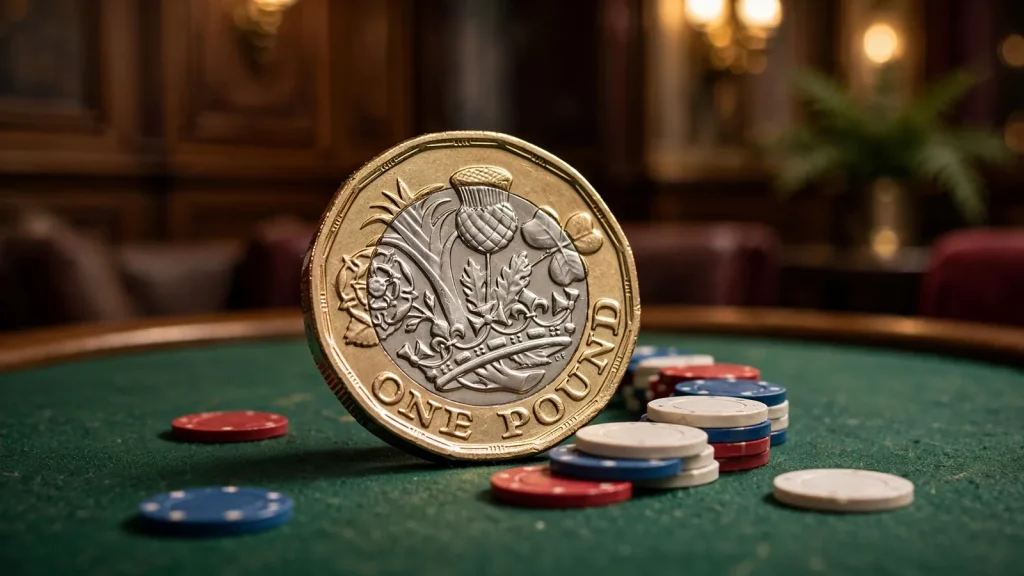
A low cashier minimum sets the amount needed to fund an account, but other rules can affect play, offers and withdrawals.
What a £1 Minimum Deposit Does—and Doesn’t—Get You
A £1 minimum deposit can make it possible to open a real-money balance without committing much at the outset. Some UK casinos accept a deposit that small. But the cashier minimum answers only one question: how little you may pay in to fund an account. It does not, by itself, tell you what it will cost to play, whether you can claim an offer, or how much you may need before you can withdraw.
That distinction matters if you are looking for a £1 minimum deposit casino in the UK as a way to keep spending tightly controlled. A small first payment limits the money you put in at that moment; it does not guarantee that every later step will also be available at that amount. The account’s rules, the games you choose and the operator’s withdrawal conditions all matter. Treat £1 as an entry point, not as a promise that the whole experience will be capped at £1.
A small deposit is not a spending plan
Once money is in an account, you decide how to use it. A £1 balance may be enough to try a game with low stakes, but it can also be spent quickly. The deposit limit says nothing about how long the balance might last or whether you will choose to add more. There is no reliable way to turn a low cashier minimum into a prediction of how much play it will buy.
Before making a first deposit, set a financial limit you can afford to lose and use the account controls to keep to it. UK-licensed remote operators must prompt new customers to set a financial limit before that first payment and make account-level controls available. A small deposit is not a substitute for that step: it is easier to make another payment when the balance runs out if you have not decided in advance where to stop.
Pay-by-phone casinos in the UK: deposits explained
Age checks are also part of opening and funding an account. UK players must be at least 18, and an operator must verify a customer’s age before allowing a deposit. That requirement applies even when the amount is only £1. A low payment threshold does not mean an account is exempt from the usual safeguards.
The inconvenient part can come later
A £1 deposit may be accepted even when the amount required to withdraw is higher. A specialist review reports minimum withdrawal thresholds of £10 to £20 at many UK casinos; that is a report from one review source, not a guarantee that every operator uses those figures or that the thresholds remain unchanged. Check the cashier and account terms for the specific site before depositing.
This difference can affect what a small deposit means in practice. If a withdrawal threshold is above your balance, you may be unable to request a payout until the account meets the stated minimum. Reaching it could require further play, and adding money simply to reach a threshold may expose you to more risk. Do not assume that you can deposit £1, decide not to play, and withdraw the same amount immediately. The operator’s rules determine what is possible.
The same caution applies to promotions. A £1 cashier minimum does not automatically mean that a £1 deposit qualifies for a welcome offer. A promotion can have separate eligibility terms, and the amount accepted into your balance is not necessarily the amount that activates an offer. If an offer matters to you, read its conditions before paying in rather than treating the minimum deposit as proof of eligibility.
What “minimum” actually tells you
The word describes a boundary, not a recommendation. It tells you the smallest amount the operator says it will accept under the applicable conditions. It does not establish that £1 is the best amount to deposit, that a particular payment route will accept it, or that the casino will suit your needs. Those details vary, so check the current cashier information and the relevant account terms rather than relying on the headline figure alone.
Attention: A £1 minimum deposit is an entry point and does not guarantee that every later step, such as withdrawals or promotion eligibility, will be available at that same amount.
Nor does a low minimum make an operator more suitable or safer. For the British market, real-money online casinos serving customers must hold the relevant UK Gambling Commission licence. Confirm that the operator is licensed before opening an account, and make sure you understand its rules before depositing. A low figure can be eye-catching; the terms around it are what determine what you can actually do.
The practical value of a £1 minimum is narrow but clear: it gives you the option to start with a small deposit where an operator accepts one. It cannot guarantee a particular amount of play, access to a promotion or a straightforward route to cashing out. If keeping costs low is the aim, look beyond the first payment and decide your limit before you begin.
Our top casino picks for the UK
- DieselwinBonus: Welcome Pack 250% up to £4000 + 200 FS · Payout speed: 1-3 business days
- NightLuckBonus: Welcome Pack + 805% Up To 6400€ + 280 FS · Payout speed: 1-3 business days
- JetsetspinsBonus: 200% Bonus + 100 Free Spins + Free Royal Wheel · Payout speed: 1-3 business days
- SpinFormulaBonus: 550% Up To £15,000 + 550 FS · Payout speed: 1-3 business days
- ZombillionBonus: Welcome Pack 250% up to £4000 + 200 FS · Payout speed: 1-3 business days
- WinBeastBonus: €5000 + 500 FS + €650 Freebet · Payout speed: 1-3 business days
How £1 Deposits Compare with More Common Minimums
A £1 cashier minimum sits at the bottom of the deposit range, but it is not a standard starting point across UK casinos. It is a rare threshold, reported by a specialist casino review as being associated with particular payment routes such as Boku or Payforit mobile billing. That makes it an exception to compare against, rather than a reliable expectation when you open an account elsewhere.
The more common figures are higher. A specialist review of UK casinos accepting direct banking describes £10 as the typical minimum for that method, while noting operators that set it at £5 or £20. That is a source-specific snapshot, not a fixed rule for every casino or a guarantee that a particular cashier will still show those amounts. The useful point is the spread: a site may ask for several pounds, £10 or more, while the £1 tier is uncommon.
£10 Minimum Deposit Casinos in the UK: What to Check
Reading the deposit tiers
Think of £1, £5, £10 and £20 as reference points, not a universal ladder that every casino follows. A cashier may accept a minimum at one of these levels, or set a different threshold. The label “minimum deposit” refers to the smallest amount the operator permits you to add under the stated conditions; it does not mean that every payment route offered by that operator will accept that amount.
This distinction matters when comparing a £1 minimum deposit casino with one whose stated starting point is £10. The difference is not simply that one is cheaper in every respect. It tells you that the account can be funded at different entry amounts. Before relying on the lower figure, look for the amount displayed in the cashier for the option you intend to use. An advertised low threshold is only useful if it applies to that transaction.
The same care applies to phrases such as “lowest minimum deposit” or “£1 slots casino”. A low cashier minimum does not describe the minimum stake on a game, nor does it mean every game can be played for £1. It describes the amount accepted when funding the account. If your aim is to make a small initial payment, separate that question from what the games themselves cost to play.
Why the £1 tier is unusual
A £1 starting point is a narrow exception in a market where direct banking thresholds described by a specialist review are centred higher. The cited range for that payment method includes £5 and £20 as operator-set alternatives to the £10 figure it presents as typical. These figures should not be treated as an industry-wide tariff: individual account terms and cashier options can differ.
Direct banking thresholds for UK casinos typically center around £10, though some operators may set alternatives at £5 or £20.
Some minimum-deposit comparisons group casinos by the smallest figure they advertise, which can make a £1 option look like a general feature of the account. It may instead depend on a specific route. That is why an apparently simple comparison—£1 against £10—can obscure what you are actually being offered. Check whether the cashier states one minimum for the account or shows separate amounts alongside its payment choices.
A £1 figure is also not evidence, by itself, that a casino is legitimate or safe. For a UK player, the relevant baseline is whether the operator holds the required UK Gambling Commission licence to serve the market. A low threshold is a pricing condition, not a regulatory credential. The two questions should not be collapsed into one just because the small deposit sounds attractive.
If a site presents itself as a UK casino but its licence status is unclear, do not use the deposit amount as a substitute for checking who is offering the service. UK online gambling is legal at licensed and regulated sites, and operators serving British customers must hold the appropriate licence. That remains true whether the cashier shows £1, £5 or a higher minimum.
What to compare before choosing
When you see a claim that a casino accepts a £1 deposit, confirm that the figure is current and applies to the UK account, rather than relying on a general description. Then compare it with the cashier minimum shown for your intended method. Where the threshold is £5, £10 or £20, that is the amount to use when deciding whether the account fits your budget; a lower figure mentioned elsewhere should not override the displayed terms.
£2 Minimum Deposit Casinos in the UK: Key Checks
For a reader comparing the best £1 minimum deposit casino in the UK, “best” cannot be established by the threshold alone. The £1 tier tells you about the entry amount, while the operator’s licence and the actual cashier terms tell you more about whether the option is suitable. There is no reason to treat a £1 figure as a recommendation in itself. At most, it marks a rare low entry point beside more frequently reported minimums of £5, £10 or £20.
The practical comparison is therefore modest but useful: £1 is the lowest tier described here and is unusual; higher starting amounts are more common in the direct-banking comparison, with the cited review placing its typical figure at £10 and recording £5 and £20 alternatives. Verify the amount shown to you rather than assuming that one number applies across casinos, accounts and payment options.
What Happens After You Deposit £1
A £1 deposit puts a small balance into a gambling account; it does not create a separate kind of game or guarantee that the money can later be withdrawn as cash. The practical sequence is account checks, a playable balance, bets that reduce or change that balance, and—if money remains—an attempt to withdraw it under the operator’s rules.
£5 Minimum Deposit Casinos in the UK
Before a UK-licensed casino lets you deposit, it must verify that you are at least 18. It must also prompt you to set a financial limit before your first deposit and make account-level limit controls available. Those steps matter even when the amount is only £1: a small starting balance does not remove the age and safer-gambling requirements that apply to the account.
Once the deposit has been credited, the balance can be used for eligible real-money play. The amount at stake depends on the game. Many slots accept bets of between £0.10 and £0.20 per spin, so a £1 balance could cover several spins at those stakes if there are no other deductions and the game allows the selected bet. Each spin is a separate wager: a loss reduces the balance, while a win may increase it. There is no reliable way to predict how many spins the money will last, because that depends on the bets chosen and the results.
Online slots in Britain do not offer autoplay, and each spin must last at least 2.5 seconds. These rules do not make a small balance last longer in any dependable sense; they simply set requirements for how the game operates. You remain responsible for the amount wagered on each spin and for stopping when you reach the limit you set.
£3 Minimum Deposit Casinos in the UK: What to Check
The account balance is not the same as an amount guaranteed to be withdrawable. If you lose the £1 through play, there will be no deposit money left to request. If your balance rises, you may be able to request a withdrawal, but the operator’s cashier rules can affect whether the amount is eligible. A minimum withdrawal threshold is the smallest sum the operator will process. If that threshold is above your available balance, the money may remain in the account until the balance reaches the required level, subject to the operator’s rules.
A specialist review reports that some UK casinos set withdrawal minimums above £1. Treat that as a reason to read the cashier terms, not as a promise that any particular site will apply a specific threshold. The deposit minimum and withdrawal minimum answer different questions: the first concerns how little you may pay in; the second concerns how little you may take out. A site can accept a £1 deposit without allowing a £1 withdrawal.
If your balance is too low to meet the withdrawal threshold, you may have to leave it in the account or continue playing, where permitted. Continuing to gamble just to reach a cash-out amount carries the risk of losing the remaining balance. The threshold is therefore worth checking before you deposit, rather than only after a win. Look for the minimum withdrawal and any conditions attached to cashing out in the operator’s account or cashier terms.
A withdrawal request also does not turn a possible win into a certain one. Play can leave you with less than you deposited, the same amount, or more; the outcome depends on the game. Even when the balance is high enough to request payment, the operator’s stated process still applies. Do not treat the initial £1 as a low-cost route to a particular return.
Do not add money to your account specifically to chase a loss or to reach a minimum withdrawal threshold.
Keep the distinction between deposited money and the displayed balance in view. The balance changes as you place bets and receive any wins. A £1 deposit is simply the starting point for that sequence, not a cap on how much you could choose to stake later. Set a limit before playing and do not add money to chase a loss or to reach a withdrawal threshold.
The useful check is not only whether the cashier accepts £1. Confirm what happens to the account balance after play and what minimum amount the operator will process if you decide to withdraw. Those details determine whether a small deposit can remain a small, contained trial—or whether getting money out requires a balance larger than the one you began with.
Which Payment Methods Can Work for a £1 Deposit?
A casino may advertise a £1 cashier minimum, but that does not mean every payment option in its cashier will accept a £1 transaction. The operator sets its deposit rules, and a payment provider may impose its own conditions. The method you select therefore matters as much as the figure shown beside the cashier minimum.
At a given UK operator, the minimum deposit is generally the same across payment methods. Some casinos make an exception for direct banking, setting a higher minimum for it than for cards or e-wallets. That means a £1 minimum deposit casino might accept a small card payment while requiring more if you choose to deposit from your bank account. Read the cashier details for the method you intend to use, rather than assuming that one minimum applies to every option.
£4 Minimum Deposit Casinos in the UK: Explained
Debit cards
Visa and Mastercard debit cards are widely accepted by UK casinos and can support low-value deposits. If you are checking whether an online casino with a £1 minimum deposit will take your card, confirm that the amount applies to card payments specifically. The displayed minimum might relate to the operator’s general cashier rules, while the card option can have its own restriction.
Credit cards are not an alternative. The UK’s ban on credit-card gambling, introduced in 2020, means UK-licensed casinos cannot accept credit cards for gambling deposits. Use a debit card linked to your own funds instead. A payment routed through a wallet does not make credit-card gambling acceptable: the wallet must not let credit-card funds be used for gambling.
Before you deposit, the operator must verify your age, and you must be at least 18 to gamble legally. UK-licensed remote operators must also prompt new customers to set a financial limit before their first deposit and make account-level limit controls available. These steps apply even when the amount you intend to deposit is small.
E-wallets
E-wallets can be another way to fund an account, but acceptance is not universal and a particular wallet may not support a £1 payment at every casino. Check both the casino’s listed minimum for that wallet and the payment screen before authorising a transaction. An e-wallet used for a gambling deposit must be funded by debit or another permitted source, not credit.
Attention: E-wallets must be funded by debit or other permitted sources; they cannot be used to route credit-card funds for gambling deposits.
A familiar wallet name in a cashier is not, by itself, confirmation that the method will work for your intended amount. The operator may set a method-specific threshold, or the payment provider may have its own rules. If the cashier will not accept £1, using a different permitted method may be possible, but do not assume the same minimum carries across automatically.
Direct banking
Direct banking lets you pay from a bank account rather than using a card or wallet. It is a permitted way to fund a UK gambling account, but it may not be the most practical choice when you are trying to deposit exactly £1. Some casinos set a higher minimum for bank payments than for cards or e-wallets.
Check the direct-banking option in the cashier before starting the payment. If its minimum is above the amount you planned to deposit, the operator’s general £1 figure does not override that condition. The payment method may also be unavailable for an account or transaction for reasons set by the operator or provider.
Paysafecard vouchers
Paysafecard works differently from a debit card or bank payment. Vouchers are sold in fixed values of £5, £10, £25, £50 and £100, so you cannot buy a voucher for exactly £1. A single voucher can, however, fund several smaller deposits if the casino accepts Paysafecard and allows the balance to be used that way.
The voucher’s face value and the casino’s minimum deposit are separate things. A casino might accept smaller deposits from a remaining voucher balance, but you should check its cashier rules rather than treating that as guaranteed. Also consider how much of the voucher balance you actually want to put into the gambling account; buying a larger fixed-value voucher simply to make a small deposit can leave funds unused in the payment account.
No Minimum Deposit Casinos in the UK: What £1 Means
In practice, a £1 deposit depends on the combination of operator rules and payment-method rules. Check the minimum shown for the specific option, use only permitted funds, and do not mistake a low cashier minimum for a promise that every method will process the same amount.
Real-Money Play, Welcome Offers and the Current Wagering Cap
A £1 deposit can be used for real-money play where the casino’s cashier accepts that amount. It does not, by itself, mean you have taken a bonus. Your deposited cash and any promotional funds are separate: the deposit is money you put into the account, while bonus funds are credited under an offer’s conditions.
That distinction matters if you are looking for a £1 minimum deposit casino for real-money play. A specialist review describes welcome offers as commonly requiring a qualifying deposit between £5 and £10. On that basis, depositing £1 would fund your account but would not meet the stated entry amount for those offers. The individual promotion’s terms decide eligibility, so check them before depositing rather than assuming that accepting a small deposit also activates a deal.
If you do qualify for an offer, its conditions apply to the bonus, not because you used a particular payment method. Wagering requirements say how much qualifying play is needed before bonus funds or related winnings can be withdrawn. Game restrictions determine which play counts, and a maximum withdrawal cap can limit what may be taken from the bonus. These are bonus conditions; they do not turn your original £1 deposit into bonus money.
As of 19 January 2026, the UK Gambling Commission caps wagering requirements for bonus funds at ten times the bonus value.
The rules changed on 19 January 2026. From that date, the UK Gambling Commission’s cap means wagering attached to bonus funds cannot be set above ten times the bonus value. Older descriptions of higher requirements should not be treated as the current UK limit. The cap does not mean that every offer has no other conditions: game eligibility, any withdrawal cap and the offer’s own qualifying-deposit rule still need to be read separately.
Before making a first deposit, a UK-licensed operator must ask you to set a financial limit, and it must verify your age before allowing the deposit. You must be at least 18 to gamble. These safeguards sit alongside the offer terms; they are not a reason to treat a promotional balance as ordinary cash.
For a mobile casino as much as a desktop site, look at the cashier and the promotion terms as separate checks. Confirm that the deposit amount is accepted, then check whether that amount qualifies for the offer and what conditions attach to any bonus. If the aim is simply to play with your own money, declining an offer may avoid bonus conditions, but the account’s ordinary rules still apply. A low entry amount is useful only if the terms match what you intend to do.
Claims About Casinos ‘Not on Gamstop’ Need Careful Checking
A casino described as “not on GamStop” may sound like a straightforward alternative, but the label does not tell you who operates it, which rules apply or whether the description is accurate. It is not proof that a site is suitable for UK customers, nor does it establish that a casino accepts a £1 deposit. Those are separate claims and need separate checks.
Online Casinos That Accept SMS Deposits
For customers in Great Britain, an operator offering real-money gambling must hold the relevant UK Gambling Commission licence, wherever the operator is based. A site operating offshore without that licence is outside the UKGC regulatory system. The distinction matters: a familiar name, polished website or claim about self-exclusion does not replace a licence. Nor does a description such as “not on GamStop” show that a site has the safeguards expected of a UK-licensed operator.
If you have self-excluded through GamStop, looking for a way around that decision deserves particular care. A label promising access outside the scheme should not be treated as a recommendation or reassurance. Avoid relying on promotional wording alone; establish which legal entity runs the site and whether it is authorised to serve customers in Great Britain. UK rules restrict advertising of gambling operators to those with the appropriate local licence.
Age and account safeguards are not optional details. UK players must be at least 18, and operators must verify a customer’s age before allowing a deposit. UK-licensed remote operators must also prompt new customers to set a financial limit before their first deposit and provide accessible controls for managing account limits. If a site’s identity, licence status or safeguards are unclear, do not assume that the same protections apply.
Avoid relying on labels like "not on GamStop" as a substitute for verifying that an operator holds a valid UK Gambling Commission licence.
Claims about £1 minimum deposit slot sites and claims about being outside GamStop should therefore be assessed independently. A low entry amount says nothing by itself about licensing or customer protection. Likewise, a site’s relationship to a self-exclusion service does not verify its cashier terms. Before creating an account, check the operator’s status with the UK Gambling Commission and consider whether gambling is appropriate for you at all.
PayPal, Small Transactions and Fees
PayPal can be a convenient way to fund a casino account, but its availability depends on the operator. A casino may not offer PayPal at all, and an operator that does accept it may set a minimum transaction above £1. The payment option shown in the cashier, rather than the name of the wallet, determines whether a small deposit can go through.
Check how the PayPal balance is funded, too. UK gambling operators cannot accept credit-card payments, including credit-card funds routed through a money service. A wallet used for gambling must therefore be funded in a way that complies with that restriction. If PayPal is not available, a debit card or another permitted option may be offered instead; do not assume that every method supports the same amount.
A small payment can also be affected by a provider’s fee. Specialist payment-method reviews have reported flat transaction charges of £1 to £3 from some providers. That is not a charge that applies to every PayPal payment or every casino deposit, so check the provider’s terms before confirming. On a £1 transaction, a flat fee in that reported range could match or exceed the amount being sent. A low cashier minimum would not make that fee disappear.
iPad Casinos UK: How to Check a Site Before Playing
The cashier should show the amount charged to your account before you approve the payment. Check whether the figure is the deposit itself or includes a separate fee, and avoid proceeding if the total is unclear. Also set a financial limit before making a first deposit; a payment that is technically small can still lead to further spending.
Finally, distinguish a successful deposit from the ability to withdraw. A specialist review has reported minimum withdrawal amounts ranging from £1 to £5 at some casinos, but that is not a guarantee about any particular operator or account. Read the cashier and withdrawal terms for the casino you intend to use. A small-deposit option is useful only if its costs and conditions are clear before you pay.
Low Deposit Does Not Always Mean Low Withdrawal Threshold
A casino can accept a small deposit without allowing you to withdraw a similarly small amount. The cashier minimum and the withdrawal minimum are separate rules: the first governs money going into your account; the second determines how much you must have available before a payout can be requested.
One specialist review reported withdrawal thresholds of £10 to £20 at many UK casinos. That is a report about the operators it assessed, not a fixed rule across the market. A separate specialist review put minimum withdrawals for debit cards and some e-wallets between £1 and £5. The difference between those figures is a reminder to check the specific cashier terms rather than assume that a low deposit minimum carries through to withdrawals.
Do
- Check specific withdrawal minimums in the cashier
- Verify if the threshold depends on the payout method
- Read the cashier terms before depositing
Don’t
- Assume a low deposit minimum means a low withdrawal threshold
- Deposit money without knowing the cash-out rules
- Treat the deposit minimum as evidence for withdrawal limits
If you deposit £1 and later have less than the stated withdrawal minimum, you may need to keep playing until your balance reaches the required amount, or leave it in the account. Neither outcome makes the withdrawal rule obvious from the deposit screen. Check the casino’s withdrawal terms before paying in, including whether the threshold depends on the payout method.
Also look for any stated conditions on requesting a payout. The key point is not that a particular threshold applies everywhere, but that deposit and withdrawal limits can differ—even at the same operator. Treat a £1 cashier minimum as information about getting money into the account, not evidence that you can cash out £1.
Does ‘£1’ Mean the Same Thing Across Casinos?
A stated £1 minimum deposit describes the lowest amount an operator says its cashier will accept; it does not necessarily mean every payment route on that account will process a deposit of that size. At a given UK casino, the minimum is generally shared across payment methods, but some operators set a higher threshold for direct banking than for cards or e-wallets. The cashier’s amount and the payment option you select therefore both matter.
The distinction is practical: an account may advertise a £1 entry point, yet the method you want to use may require a larger deposit. Treat the figure as a starting point to verify in the cashier, not as a promise that every transaction will go through at that amount. Payment options and their limits can differ between operators.
A low cashier minimum also says nothing by itself about promotional eligibility. Some operators exclude the lowest deposit bracket from welcome promotions, according to a specialist review. In that case, a £1 deposit may be accepted for ordinary account use but not count towards the offer. The promotion’s qualifying-deposit terms are separate from the cashier minimum, so check them before depositing if receiving the offer matters to you.
In short, “£1 minimum” can refer to the operator’s lowest stated threshold, not necessarily the minimum for your chosen method or the amount needed to qualify for a promotion. Check both conditions before confirming a deposit.
A Verified £1-Minimum Example—and What the Evidence Supports
A specialist casino review identifies NetBet as the only UK Gambling Commission-listed casino in its comparison with a £1 cashier minimum. That is a specific finding from one review, not evidence that NetBet is the only UK-licensed operator to offer this threshold across the whole market. Cashier terms can change, so treat the figure as a lead to verify against the operator’s current UK account terms, rather than a permanent guarantee.
The same review gives a different picture for Zodiac, Luxury Casino and UK Casino Club: it records a £10 minimum deposit on their UK accounts and no sign-up bonus. These details distinguish those accounts from a £1 option; they do not establish that every casino with a higher minimum has the same terms. Nor does a low cashier minimum, on its own, show that an offer is available.
Before depositing, check that the site holds a current UK Gambling Commission operating licence and that the cashier displays the minimum for the payment method you intend to use. The amount shown in general site information may not settle every account-specific condition. UK operators must verify your age before accepting a deposit, and you must be at least 18 to gamble. They must also prompt new customers to set a financial limit before the first deposit, so decide on a limit you can afford before proceeding.
The useful distinction is narrow but important: the review supports a £1 cashier minimum for NetBet and reports higher UK-account minimums for the three named casinos. It does not justify treating any one figure as fixed or assuming that all other terms match.
Which payment method is best for low-deposit casino players?
Debit cards are a practical option: they are widely accepted and support low minimum deposits. Check the cashier’s minimum for your chosen method, as it can vary.
Can I use a £1 deposit to claim all welcome bonuses?
No. Many welcome offers require a qualifying deposit of £5 to £10, and some exclude the lowest deposit bracket altogether.
Why are there so few £1 deposit casinos?
A £1 minimum is rare and is often limited to specific payment routes, such as mobile billing. Welcome offers commonly require a higher qualifying deposit, so a £1 payment may not activate them.
Can players claim a bonus with a small deposit?
Yes, if the deposit meets the offer’s qualifying minimum. Many welcome offers require £5 to £10, so a £1 deposit often will not qualify.
Is a £1 deposit casino worth it?
It can suit you if you want to start with a small payment, but £1 does not guarantee access to a bonus or an easy withdrawal. Check the withdrawal minimum and set a limit you can afford to lose before you play.
Payments
Created by the "Hot Streak Online" editorial team.